Source API Certified Hnbr Pump Piston for Mud Pumps, Flat Gaskets, and Machinery
Find API certified Hnbr pump piston options for mud pumps, flat gaskets, and machinery manufacturing. Compare 30 listings with varying materials like NBR and alloy, specifications, and MOQs to identify suitable suppliers for your industrial needs.
Key considerations
Products List




Comprehensive Sourcing Guide
Strategic Sourcing Guide for API Certified HNBR Pump Pistons
Understanding the Technical Landscape of Mud Pump Pistons
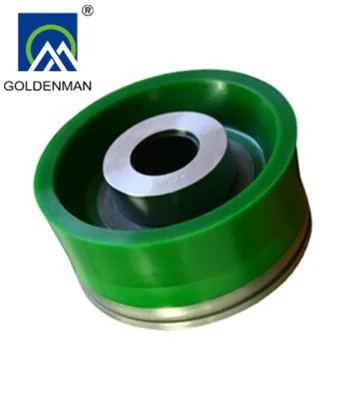
The procurement of pump pistons, specifically those designated for mud pump applications, requires a nuanced understanding of the diverse material compositions and manufacturing processes available in the global market. The core keyword "API certified HNBR pump piston" points toward a specific subset of industrial components designed for high-performance drilling operations. However, the supply landscape is characterized by significant variation in material specifications. While the target search focuses on HNBR (Hydrogenated Nitrile Butadiene Rubber), the observed product data reveals a spectrum of materials including Cast Steel, Alloy, and standard NBR (Nitrile Butadiene Rubber). Buyers must recognize that "piston" in this context often refers to the rubber sealing element that fits within a metal assembly, rather than the entire metallic piston rod itself.
The technical specifications for these components vary widely based on the intended pump series. Observed data indicates compatibility with models such as the Emsco F-800, F-1300, F-500, and the 3nb Series. The physical dimensions are critical, with specifications ranging from 60mm to 300mm in diameter. This wide range necessitates precise verification of the pump model before ordering. Furthermore, the manufacturing process plays a pivotal role in the component's integrity. While some rubber pistons are molded, the metallic counterparts often undergo forging or stamping processes. Surface treatments also differ; some units are supplied with spray-paint for corrosion resistance, while others are delivered with "without processing" surface finishes, requiring the buyer to determine if additional treatment is necessary for their specific operating environment.
Navigating Certification and Compliance Standards
When sourcing "API certified" components, the verification of compliance is the most critical step in the procurement workflow. The term "API" refers to the American Petroleum Institute, a trade association that sets standards for the petroleum and natural gas industries. In the context of pump pistons, certification ensures that the product meets rigorous safety and performance benchmarks required for drilling operations. The supplied product facts explicitly list "API" and "API&ISO" as certifications available for certain items. This distinction is vital; a product listing "API" may meet specific API standards, while "API&ISO" indicates compliance with both API standards and International Organization for Standardization (ISO) quality management systems.
Buyers must exercise caution when interpreting certification claims. The presence of a certification label does not automatically guarantee that every listed product in a search result possesses that status. The data shows that while some products are marked with API certification, others list "standard" as their product standard or have no specific certification mentioned. It is imperative for the procurement team to request valid, up-to-date certification documents directly from the supplier for the specific batch or model being purchased. Relying solely on the product title or a generic "API" tag in a catalog can lead to non-compliant procurement. Additionally, the "standard" product standard noted in the data suggests that some items may adhere to general industry norms rather than specific API 16A or similar drilling equipment standards. Verification should always include checking the specific API standard number (e.g., API 16A) against the product documentation to ensure the seal material and dimensions meet the exact requirements of the drilling rig.
Cost Drivers and Pricing Dynamics in the Market
The pricing structure for mud pump pistons is influenced by a complex interplay of material costs, manufacturing complexity, and order volume. The observed price range in the market spans from $0.30 to $25,300 USD. This extreme variance is not indicative of a single product type but rather reflects the difference between a single rubber sealing element and a complete assembly or a large batch of high-specification components. A price point near the lower end of the spectrum typically corresponds to individual rubber pistons made from standard NBR or HNBR materials. Conversely, prices approaching the upper limit likely involve complete piston assemblies, custom-forged steel components, or large-volume orders with specialized packaging and logistics.
Material composition is a primary driver of cost. HNBR (Hydrogenated Nitrile Butadiene Rubber) is generally more expensive than standard NBR due to its enhanced resistance to heat, abrasion, and chemical degradation. The data confirms the availability of HNBR, NBR, and Urethane Rubber options. The choice of material directly impacts the "Length of Use," which is observed to range between 400 and 600 hours. Higher-performance materials like HNBR often extend this lifespan, offering a lower cost-per-hour of operation despite a higher initial unit price.
Minimum Order Quantity (MOQ) also significantly affects the unit cost. The observed MOQ ranges from 1 to 20 units. Suppliers with an MOQ of 1 allow for small-batch testing or emergency replacements, often at a premium per-unit price. Suppliers requiring an MOQ of 20 or more typically offer volume discounts. Buyers must balance the need for immediate availability against the economies of scale. Additionally, packaging requirements, such as "Wooden Box" or "Wooden Bag and Sea Shipment," add to the overall landed cost. The origin of the product, noted as China (specifically Hebei and Shandong provinces), influences logistics costs and lead times, which are secondary but essential factors in the total cost of ownership.
Typical Applications and Performance Requirements
The primary application for these components is in the drilling industry, specifically within mud pumps used for circulating drilling fluid. The data explicitly identifies "Mud Pump Pistons" and "Piston Pump" as the core applications. These pumps are critical for maintaining the hydrostatic pressure required to bring cuttings to the surface and cool the drill bit. The performance requirements are stringent, as the pistons operate under high pressure and abrasive conditions.
The observed "Operation Pressure" varies from "Atmospheric Pressure" to "Vacuum," which may seem contradictory for a mud pump application. This likely reflects the range of testing conditions or the specific phase of the pump cycle (suction vs. discharge) rather than the full operating pressure of the pump itself. However, the "Pressure Medium" is consistently listed as "Oil," indicating the type of fluid the seal is designed to contain or the hydraulic system it interacts with. The "Theory" of operation is cited as "Centrifugal Pump" in some contexts, though mud pumps are typically reciprocating piston pumps. This discrepancy highlights the need for buyers to clarify the pump type with the supplier to ensure the piston geometry matches the reciprocating motion of the specific pump model.
Durability is a key performance attribute, with "Durable" and "Wearable" listed as advantages. The tensile strength of the metallic components is observed to be greater than 610MPa, ensuring they can withstand the mechanical stresses of high-pressure pumping. The "Structure" is noted as "Multi Cylinder," which is typical for high-capacity mud pumps where multiple pistons work in unison. The color of the rubber pistons, often "Yellow or Others," can serve as a visual indicator of the material grade or manufacturer, though this should not be relied upon as a primary quality metric.
Supplier Evaluation and Operational Capabilities
Selecting the right supplier is as critical as selecting the right product. The data indicates that the majority of suppliers are "Factory" types, suggesting direct manufacturing capabilities rather than trading companies. This is advantageous for buyers seeking technical support, custom modifications, and competitive pricing. The origin of these products is consistently listed as China, with specific provinces like Hebei and Shandong mentioned. These regions are known for their heavy industrial manufacturing bases, particularly in steel and rubber processing.
When evaluating a supplier, buyers should verify the "Company Type" and the specific manufacturing processes they employ. The presence of "Forging" and "Stamping" processes in the data suggests that suppliers offer both cast and forged metal components. For rubber pistons, the supplier's ability to handle materials like "NBR/HNBR/PU" is essential. Buyers should inquire about the supplier's quality control protocols, especially regarding the "API" certification. A factory that holds API certification should have a documented quality management system that aligns with API standards.
The "Port" of shipment is listed as "Tianjin," which is a major port in northern China. This information is useful for logistics planning and estimating freight costs. However, buyers must confirm if the supplier can ship from other ports if their facility is located elsewhere. The "prod_packing" details, such as "Wooden Box and Sea Shipment," indicate that the supplier is experienced in international logistics and understands the need for robust packaging to prevent damage during transit.
Quality Control and Long-Term Procurement Strategy
Ensuring the long-term reliability of pump pistons requires a robust quality control (QC) strategy. The observed "Length of Use" of 400-600 hours provides a baseline for expected service life, but actual performance can vary based on the drilling conditions, fluid composition, and maintenance practices. Buyers should establish a protocol for inspecting incoming pistons for defects such as cracks, uneven surfaces, or material inconsistencies. The "Surface Treatment" of "Spray-Paint" on some components suggests that corrosion resistance is a factor, and buyers should verify the thickness and adhesion of the paint if the component is exposed to harsh environments.
For long-term procurement, building a relationship with a reliable factory supplier is recommended. The "Customization" attribute being "Available" is a significant advantage. It allows buyers to request specific modifications to the piston dimensions or material composition to suit unique pump models or operating conditions. This flexibility can reduce downtime by ensuring a perfect fit and optimal performance.
Buyers should also consider the "Standard" product standard listed in the data. While some items are marked as "standard," others may have specific model numbers like "Emsco F800" or "Eaton." Aligning the procurement strategy with the specific pump manufacturer's recommendations is crucial. If the pump is an Emsco model, sourcing an Emsco-compatible piston ensures compatibility. If the pump is an Eaton model, the procurement team must verify that the "Eaton" model number listed in the data corresponds to the actual pump in use.
Finally, the "MOQ" of 1 to 20 units offers flexibility for different procurement strategies. For routine maintenance, an MOQ of 1 allows for just-in-time ordering, reducing inventory costs. For planned overhauls or new rig setups, an MOQ of 20 or more can secure better pricing and ensure a consistent supply of components. By combining technical verification, certification checks, and strategic supplier engagement, buyers can effectively source API-certified HNBR pump pistons that meet the demanding requirements of the drilling industry.
FAQs
What certifications are available for mud pump pistons?
API and API&ISO certifications are available for specific piston models. Buyers must verify valid documents for the exact batch, as not all listed products carry these labels and some only meet general industry standards.
Which materials are used for mud pump piston seals?
Materials include NBR, HNBR, Urethane Rubber, Cast Steel, and Alloy. HNBR offers enhanced resistance to heat and abrasion, while standard NBR is also available for general applications depending on the pump requirements.
Can I customize the specifications for these pump pistons?
Customization is available for these components to suit unique pump models. Buyers can request specific dimensions ranging from 60 to 300mm or specific material grades like NBR/HNBR to ensure compatibility with their equipment.
What is the minimum order quantity for these pistons?
Minimum order quantities range from 1 to 20 units depending on the supplier. Lower MOQs allow for small-batch testing, while higher volumes often provide better pricing and economies of scale for large drilling operations.
How long do these rubber pistons typically last in operation?
The observed length of use ranges between 400 and 600 hours. Actual lifespan depends on the material grade, such as HNBR versus NBR, and the specific operating conditions of the mud pump during drilling.
Which pump models are compatible with these piston assemblies?
These pistons are compatible with Emsco F-800, F-1300, F-500, and 3nb Series pumps. Buyers must verify the specific model number to ensure the correct dimensions and sealing properties match their existing machinery.